Kling 3.0 Rumors: What to Expect From Kuaishou's Next-Gen AI Video Generator
Explore the confirmed features and speculations about Kling 3.0, including 4K/60fps support, advanced physics engine, and unified editing interface.

Artificial-intelligence video tools have come a long way in just eighteen months. Kuaishou's Kling model went from a 5-second beta in June 2024 to a commercial platform serving more than 60 million creators and 30 000 enterprise customers by December 2025. The most recent update, Kling 2.6, introduced simultaneous audio-visual generation with native dialogue, sound effects and ambient audio so that a single prompt yields a complete clip. Kuaishou's Omni Launch Week in early December 2025 also unveiled Kling Video O1, a unified multimodal model that accepts text, images and even video clips and can edit or transform them within one workspace. This rapid cadence has fueled speculation about an impending Kling 3.0 release. Here's what is confirmed, what's likely, and how creators can prepare.
Recap: Kling 2.6 and the Omni O1 Suite
Understanding where Kling is today helps set expectations for the next release.
Simultaneous Audio-Visual Generation
The 2.6 update launched during Omni Week added native audio to Kling's diffusion-transformer architecture. Instead of stitching sound in post-production, the model now generates video, voiceovers, sound effects and background ambience in one pass, producing clips up to two minutes long at 1080p and 30 frames per second. This "see the sound, hear the visual" capability reduces editing time by more than half and is bilingual (Chinese/English) out of the box.
Improved Physics and Motion Engine
Compared with earlier versions, Kling 2.6's architecture leverages 3D-consistent scene modeling and enhanced temporal stability. Creators report far sharper outputs, realistic gravity, water and cloth interactions, and cinematic camera paths. The upgraded physics engine reduces limb fusion and "AI wobble" and provides more coherent motion across multi-second clips. These advances suggest Kuaishou is already working toward the physical-interaction improvements rumored for version 3.0.
Kling Video O1: Unified Multimodal Editing
The Kling O1 model (also called Omni One) extends Kling from simple prompt-to-video generation to a full creative suite. O1 accepts text, images, start and end frames and even video clips, allowing users to combine inputs and edit them within a unified interface. Features include:
- Multimodal input understanding: O1 can read text descriptions alongside pictures and video segments to compose cohesive scenes.
- Reference & transformation tools: Users can add or remove objects, change backgrounds or styles and adjust weather or lighting without leaving the tool.
- Start & end frame mode: By providing the first and last frame, O1 generates smooth motion between them and lets creators control camera paths.
- Multi-element editing: Fine-tune specific regions of a clip—remove a distracting object, switch a character or restyle a scene—without regenerating the entire video.
- Length control: O1 supports clip durations from 3 to 10 seconds, giving creators control over pacing.
Kuaishou describes O1 as providing "director-level" precision. According to an AIBase report on Omni Week, O1 enables users to keep a character's appearance while changing lighting or backgrounds and can generate continuous videos up to two minutes. This product aims to shift AI video from "random generation" to programmed directing, signalling Kuaishou's ambition for more controllable and professional workflows.
Canvas Agent: Storyboards on Demand
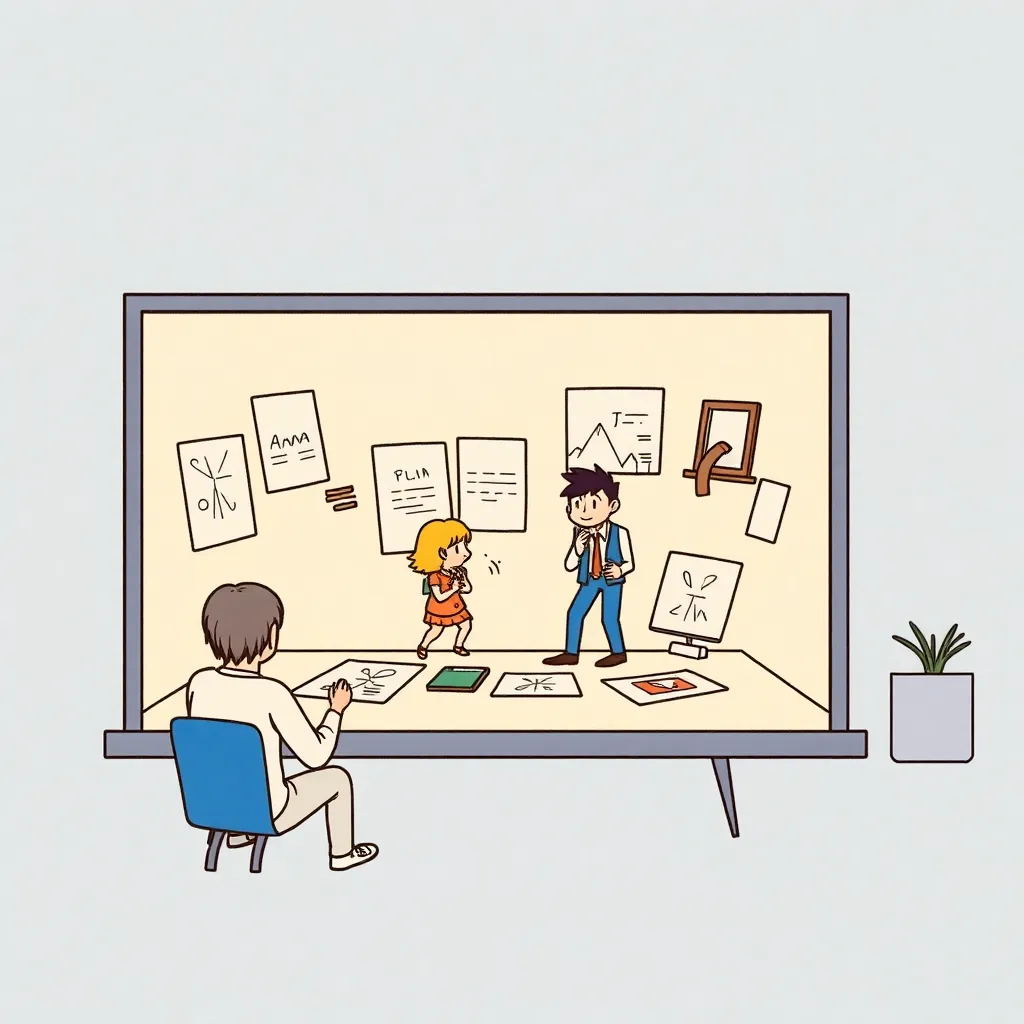
On 28 January 2026 Kling released the Canvas Agent, an interactive storyboard tool built atop the O1 foundation. Canvas Agent can transform simple text descriptions into structured storyboards and maintain visual identity across shots. Key capabilities include:
- One-click storyboards: Turn a high-level idea into a sequence of scenes and camera angles instantly.
- Multi-angle expansion: Generate multiple perspectives (close-ups, wide shots, tracking shots) from a single reference image to enrich storytelling.
- Consistent elements: Ensure that characters and backgrounds remain consistent throughout the narrative.
- Reverse prompt & multi-turn dialogue: Extract prompts from existing images and iteratively refine scenes via conversation with the agent.
Canvas Agent shows where Kling is headed: from generating isolated clips toward building complete scenes with continuity and precise control.
Confirmed Roadmap: 4K/60 fps and Custom Voices
While Kuaishou has not officially announced Kling 3.0, the company has hinted at its roadmap. In a December 2025 article covering the 2.6 release, AIBase reported that Kuaishou plans to launch a 4K/60 fps version by Q1 2026 and open a custom voice library. A separate piece from Unified AI Hub echoed this ambition, noting that Kuaishou intends to deliver 4K/60 fps capabilities and expose custom voice libraries as part of its ambitious roadmap. These statements represent the only concrete features publicly acknowledged by the company and suggest that higher resolution and more flexible audio may define the next major release.

Likely Features of Kling 3.0
Beyond the confirmed roadmap, industry watchers and creators speculate about what Kling 3.0 might deliver. These predictions synthesize patterns from previous releases and announcements; they are not official and should be treated as informed guesses.
1. Native 4K & High-Frame-Rate Workflow (confirmed)
Kuaishou's Q1 2026 target for 4K/60 fps means Kling 3.0 will likely be the first version to generate high-resolution clips natively. Current 2.6 models output at 1080p; 3.0 could double the pixel count and improve motion fluidity with a 60 fps option. Higher resolutions will reduce reliance on upscaling and allow seamless integration into professional productions.
2. Regional Inpainting and Precision Editing
The O1 model introduced multi-element editing, allowing users to modify specific objects or backgrounds without regenerating the entire clip. Canvas Agent extends this idea with interactive storyboarding. Community discussions suggest that Kling 3.0 will support pixel-level inpainting, enabling creators to select a precise region (e.g., a hand or prop) and regenerate just that area. This would eliminate the need to re-render a whole clip when fixing small errors.
3. Advanced Physics and Physical Interaction Engine
Kling 2.6 already features improved motion realism with complex running, acrobatics and cloth simulation. However, characters still occasionally "melt" when they touch or interact with objects—a limitation common across AI video models. Rumours point toward a new physics engine in Kling 3.0 capable of handling contact dynamics such as hugging, fighting and object manipulation more robustly. This would close the gap between AI-generated and live-action footage.

4. Longer and More Cohesive Sequences
Kling O1 can already generate continuous videos up to two minutes, and the 2.6 Pro tier produces clips up to three minutes at 1080p. Competitors like OpenAI's Sora 2 generate 25-second clips. Community expectations suggest that Kling 3.0 may support 30- to 60-second "standard" generations at high resolution. When combined with Canvas Agent's storyboard capabilities, this would enable multi-scene narratives with consistent characters and scene continuity.
5. Unified Interface and Workflow
The trend from separate models (1.6, 2.0, 2.6) toward Omni-level tools (O1, Canvas Agent) hints that Kling 3.0 may consolidate these capabilities into a single interface. Creators could describe a story, upload references, edit specific elements, and generate extended sequences without switching tools. Integration with a custom voice library would allow users to choose or clone voices, further streamlining production.
When Will Kling 3.0 Arrive?
Kuaishou operates on a rapid update cadence: Kling 1.6 launched six months after the beta, 2.0 followed four months later, and 2.6 arrived in December 2025. The company's investor relations page hints that the Omni Week releases represent "high-velocity iteration". Given the Q1 2026 roadmap for 4K/60 fps, it is reasonable to expect a Kling 3.0 announcement in the first quarter of 2026. However, official confirmation has not yet been released, so creators should watch Kuaishou's channels and trusted news sources for updates.
Preparing for Kling 3.0
Even without a definitive release date, creators can prepare for the next generation of Kling by mastering the current tools and refining their workflows:
- Explore Kling O1 and Canvas Agent. Learning how to combine text, images and video clips within O1 and using the Canvas Agent for storyboarding will make it easier to adapt to 3.0's unified interface.
- Experiment with multi-element editing. Practice editing specific objects or backgrounds in existing clips to understand the limitations and capabilities of regional editing.
- Optimize prompts for physics. Test complex motions (running, interactions, water) in 2.6 and note where the model struggles. This will help you evaluate the improvements in 3.0's physics engine when it arrives.
- Plan for higher resolution. Consider how 4K/60 fps output will affect your workflow, from storage requirements to integration with editing software. Test upscaling pipelines now so you can compare them with native 4K output later.
- Try Kling online. You can use Kling AI video generation directly at kling3.pro, which also offers the latest news, tutorials and community resources. The official Kuaishou platform is available at klingai.com.
- Stay informed via official channels. Follow Kuaishou's investor relations page and reputable AI news sites. Avoid phishing and malware campaigns; AIBase warns that fake Kling sites have been used to distribute malware in the past.
Final Thoughts
Kling has already reshaped AI video generation by combining text-to-video diffusion with synchronized audio, cinematic camera controls and unified editing tools. Kuaishou's roadmap to 4K/60 fps and a custom voice library suggests that Kling 3.0 could set a new bar for resolution, control and realism. While rumours of regional inpainting and advanced physics are exciting, they remain speculative until confirmed by the developer. The best way to get ready is to take full advantage of current versions and build flexible workflows that can adapt as the technology evolves. Early adopters of Kling 3.0 will likely have a competitive advantage when the next generation of AI video generation arrives.
To start creating with Kling today, visit kling3.pro to use Kling AI and access in-depth guides, prompt tips and the latest updates on Kling 3.0. You can also use the official Kuaishou platform at klingai.com.
Author

Categories
More Posts

Kling 3.0 Pricing Guide: Credits, Plans, and Cost Per Video
See what Kling 3.0 really costs on kling3.pro. Compare free access, monthly plans, one-time credit packs, and the exact credit cost for 720p, 1080p, audio, multi-shot, Motion Control, and Avatar workflows.

Kling Motion Control 3.0 vs 2.6: What Changed, What It Costs, and Which One to Use
Compare Kling Motion Control 3.0 and 2.6 on kling3.pro. See what changed in facial consistency, hand precision, pricing, and the best upgrade path for creators.

Kling 3 Lite Guide: Free Trial Limits, Credits, and When to Upgrade
See how Kling 3 Lite works on kling3.pro. Learn the free trial limits, guest and sign-up credits, the 5s 480p cap, and the cheapest path to Kling 3.0.
Newsletter
Join the community
Subscribe to our newsletter for the latest news and updates